
Botanical Wisdom. Backed by Science.
Discover Mojeaga Herbal Remedy and Mojeaga Herbal Tea—botanical formulations developed around selected plant ingredients and investigated through phytochemical, preclinical and clinical research.
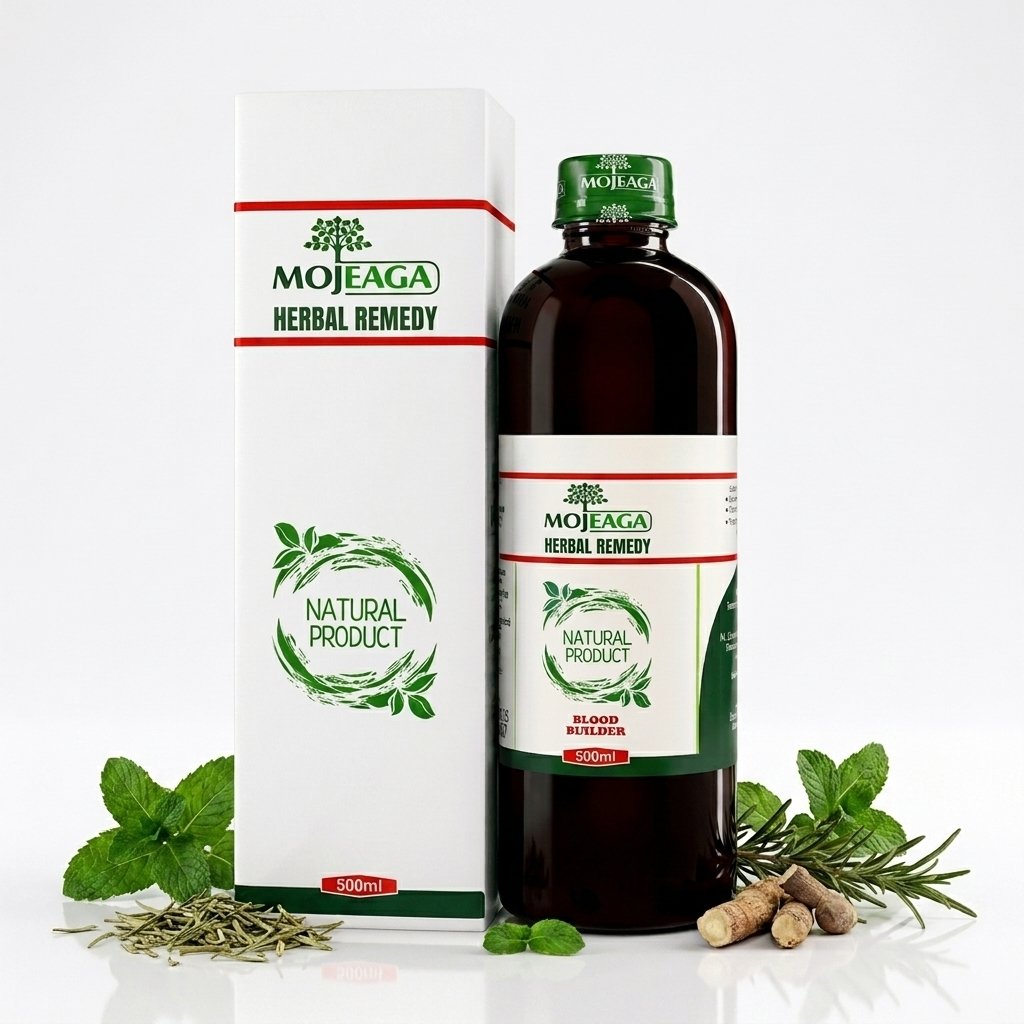
Two Products. One Botanical Philosophy.
Mojeaga brings together botanical ingredients, traditional knowledge and modern scientific investigation in two product formats: Mojeaga Herbal Remedy and Mojeaga Herbal Tea. Our approach is simple: select botanical ingredients, understand their composition, investigate their biological properties, and continue building evidence around the finished formulation.
Explore the product. Understand the ingredients. Follow the evidence.
A Botanical Liquid Formulation
Mojeaga Herbal Remedy is a liquid botanical formulation containing extracts of Alchornea cordifolia, Pennisetum glaucum and Sorghum bicolor. The finished formulation has been investigated through phytochemical analysis, antioxidant assays, preclinical research and a phase II pilot randomized clinical trial conducted in an obstetric population with anemia.
More Than a Product. A Formulation Under Investigation.
Mojeaga Herbal Remedy has been examined at several levels of scientific investigation. Researchers have characterized phytochemical constituents using GC–MS, investigated antioxidant activity and hematological effects in an animal model, and conducted a pilot randomized clinical trial evaluating Mojeaga as an adjunct to conventional oral iron therapy in women with anemia.
Phytochemical & GC–MS Analysis
Chemical constituents of the formulation have been investigated using phytochemical screening and GC–MS analysis.
READ THE RESEARCH →Antioxidant & Hematinic Research
An animal study investigated antioxidant activity and hematological parameters associated with the formulation.
READ THE STUDY →Pilot Randomized Clinical Trial
A phase II pilot randomized clinical trial evaluated Mojeaga alongside conventional oral iron therapy in an obstetric population with anemia.
READ THE CLINICAL STUDY →What Did the Clinical Study Find?
A phase II pilot, open-label randomized clinical trial enrolled 95 participants with confirmed anemia across three tertiary hospitals in Nigeria. Participants were randomized to receive either Mojeaga alongside conventional oral iron therapy or conventional oral iron therapy alone for two weeks.
Key Finding
At two weeks, the Mojeaga group showed a greater rise in hematocrit than the standard-of-care group. The published study reported a median rise of 10.00 percentage points versus 6.00 percentage points, with a statistically significant between-group difference.
Mojeaga Is Not a Substitute for Medical Care
The clinical study investigated Mojeaga as an adjunct to conventional oral iron therapy, not as a replacement for standard medical treatment.
Anemia has many possible causes. Appropriate diagnosis and management should be determined by a qualified healthcare professional.
TALK TO A HEALTHCARE PROFESSIONAL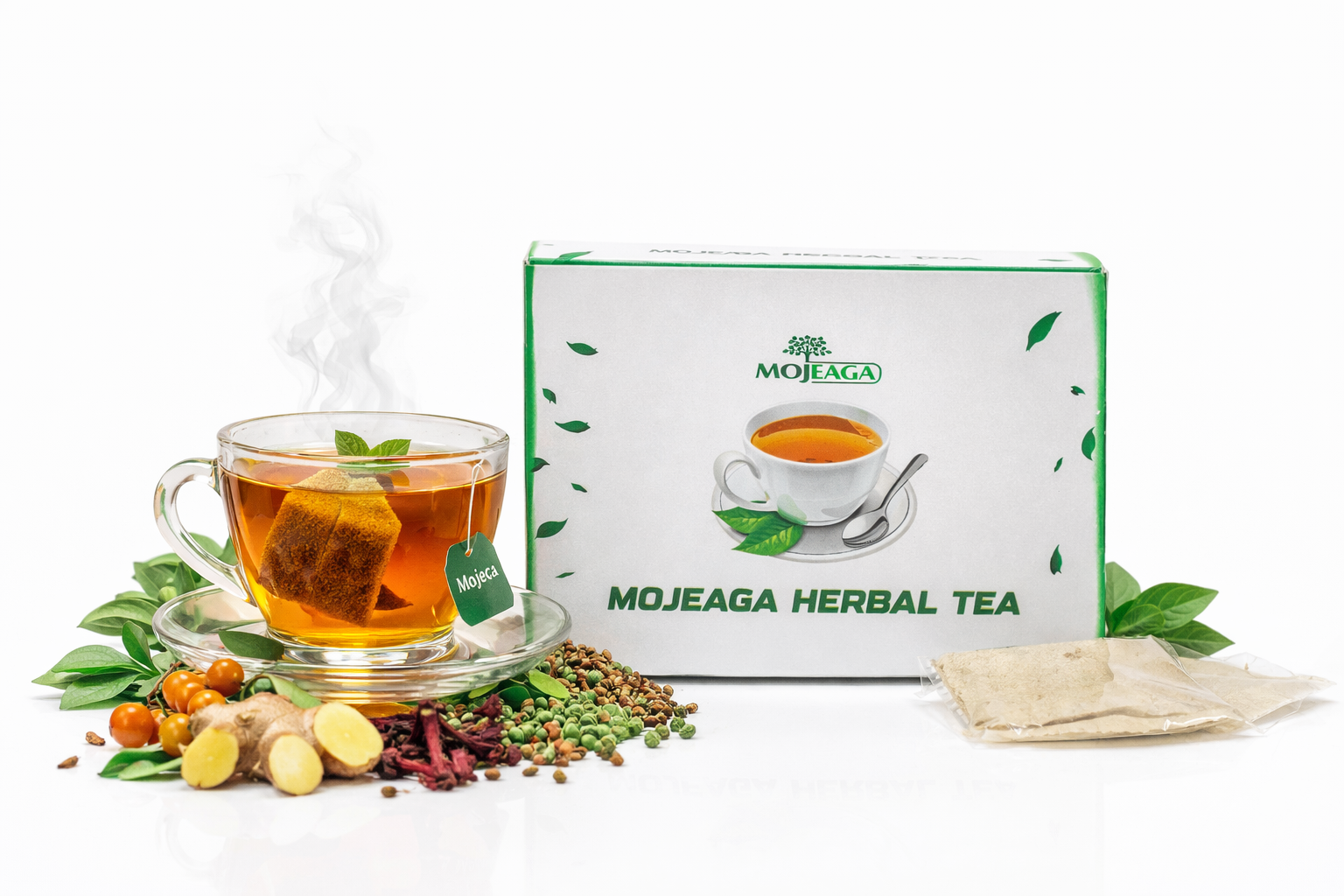
A Tea-Based Botanical Experience
Mojeaga Herbal Tea brings the Mojeaga botanical concept into a convenient tea format. It is designed for people who prefer a tea-based preparation of Mojeaga Herbal Remedy as part of their everyday wellness routine.
Three Plants. A Complex Botanical Matrix.
The Mojeaga formulation brings together three botanicals with distinct nutritional and phytochemical profiles. Scientific literature has investigated these plants individually, while research on the finished Mojeaga formulation provides additional evidence specific to the product itself.
Alchornea cordifolia
A tropical African medicinal plant with an extensive phytochemical literature.
Alchornea cordifolia has a long history of traditional use across tropical Africa and has been investigated for its phytochemical composition, biological activities and toxicological profile. A major 2016 review reported 95 identified compounds across the literature, including fatty acids, terpenoids, flavonoids, phenolic acids and alkaloids.
Sorghum bicolor
A nutrient-rich cereal with a diverse phenolic profile.
Sorghum bicolor contains a range of phenolic compounds, including phenolic acids, flavonoids and 3-deoxyanthocyanidins. Research has investigated the antioxidant and other biological properties of these compounds. The composition of sorghum varies considerably according to genotype, growing conditions and processing.
Pennisetum glaucum
Pearl millet — a nutritionally important cereal crop.
Pearl millet is recognized as a source of nutrients including iron and zinc, while also containing phytate and polyphenols that can influence mineral bioavailability. Research has investigated processing and biofortification strategies aimed at improving the nutritional value and bioavailability of these minerals.
Plants Are Chemistry.
Every plant contains a complex mixture of naturally occurring chemical constituents. Research on Mojeaga Herbal Remedy identified 32 phytochemical constituents through GC–MS analysis. Reported constituents included compounds belonging to different chemical classes, with several discussed in the study in relation to antioxidant and other biological properties.
However, identifying a compound in a formulation does not by itself prove that the compound produces a therapeutic effect in humans.
Explore the Chemistry
Explore selected compounds reported in Mojeaga research and the wider scientific literature.
How Might Mojeaga Work?
Science can investigate several layers of a botanical formulation—from its chemical constituents to laboratory activity, animal responses and human outcomes. For Mojeaga, research has reported antioxidant activity and hematological effects in preclinical studies, while the human clinical study observed changes in hematocrit when the formulation was used alongside conventional oral iron therapy.
Investigating Oxidative Stress
Oxidative stress occurs when the production of reactive oxygen species exceeds the body's ability to control or neutralize them. In preclinical research, Mojeaga Herbal Remedy demonstrated antioxidant activity in laboratory assays. The study authors proposed that this activity could be relevant to oxidative processes associated with erythrocyte biology.
These findings are preclinical and should not be presented as proof that Mojeaga prevents or treats oxidative-stress-related disease in humans.
READ THE PRECLINICAL STUDY →Evidence Has Levels.
Not all research answers the same question.
CHEMISTRY
What compounds are present?
LABORATORY
What biological activity can be observed under controlled experimental conditions?
PRECLINICAL
What happens in an animal model?
HUMAN
What happens when people receive the formulation?
Evidence at one level should not automatically be represented as proof at another.
Safety Is Part of the Science.
Responsible product communication requires more than discussing potential benefits. It also requires acknowledging what is known, what has been studied and what remains uncertain.
Clinical Safety
In the published pilot clinical study, no treatment-related serious adverse events, congenital anomalies or deaths were reported in the Mojeaga group during the study period.
Short-Term Evidence
The clinical study followed participants for two weeks. This provides limited information about longer-term use.
Ongoing Research
Larger and longer studies are needed to better characterize efficacy, safety, tolerability and the biological mechanisms of the formulation.
Individual Medical Advice
People who are pregnant, breastfeeding, taking medicines, managing a chronic condition or experiencing unexplained symptoms should consult an appropriate healthcare professional before using any health product.
Trust Requires Documentation.
Mojeaga is committed to responsible product development, quality documentation, traceability and compliance with applicable Nigerian regulatory requirements.
Go Deeper Than the Product Label.
Healthcare professionals can explore the scientific literature behind Mojeaga, including the published clinical study, preclinical research, phytochemical investigations and literature relating to the individual botanical ingredients.
MOJEAGA SCIENTIFIC DOSSIER
A consolidated scientific resource containing formulation information, botanical ingredients, phytochemical findings, published research, safety information, regulatory documentation and references.
DOWNLOAD SCIENTIFIC DOSSIER →Contents
- Product formulation
- Botanical ingredients
- Phytochemical research
- GC–MS findings
- Human clinical evidence
- Preclinical evidence
- Safety information
- Research references
- Regulatory documentation
Explore the Original Research
We believe scientific claims should be traceable to their sources. Explore the published literature and examine the evidence for yourself.
EFFICACY AND SAFETY OF MOJEAGA REMEDY IN COMBINATION WITH CONVENTIONAL ORAL IRON THERAPY
Phase II randomized pilot clinical trial • PLOS ONE — 2023 • 95 participants
READ FULL PAPER →PHYTOCHEMICAL SCREENING, ANTIOXIDANT STUDY AND HEMATINIC PROPERTY OF MOJEAGA HERBAL REMEDY USING ANIMAL MODEL
Beni-Suef University Journal of Basic and Applied Sciences — 2022
READ FULL STUDY →RECENT TRENDS IN PHYTOCHEMISTRY, ETHNOBOTANY AND PHARMACOLOGICAL SIGNIFICANCE OF ALCHORNEA CORDIFOLIA
Journal of Ethnopharmacology — 2016 • The review describes 95 compounds reported across the A. cordifolia literature.
READ THE DATA →PHENOLIC COMPOUNDS IN WHOLE GRAIN SORGHUM AND THEIR HEALTH BENEFITS
The review discusses phenolic compounds in sorghum, including ferulic acid, gallic acid, vanillic acid, luteolin, apigenin and 3-deoxyanthocyanidins.
READ RESEARCH →PEARL MILLET, IRON & ZINC
Research has examined pearl millet's iron and zinc content, mineral bioavailability and strategies for improving nutritional value.
EXPLORE THE RESEARCH →Frequently Asked Questions
Choose Your Mojeaga
Turn Product Demand Into Opportunity.
Whether you are a wellness entrepreneur, healthcare professional, retailer or distributor, Mojeaga Network provides pathways to participate in our growing product and distribution ecosystem.
Discover Mojeaga. Explore the Evidence.
Experience the products. Learn about the botanicals. Explore the research. Make informed decisions.
IMPORTANT INFORMATION
Mojeaga products should be used according to their approved product information and applicable directions for use.
Information presented on this website about botanical ingredients, phytochemicals and scientific studies is provided for educational and informational purposes. Research findings may relate to the finished formulation, an individual ingredient, an isolated compound, an animal model or laboratory experiment and should not be assumed to have the same meaning in humans.
The existence of a research study does not mean that every potential health claim associated with an ingredient or product has been clinically established.
Nothing on this website is intended to replace diagnosis, treatment or advice from a qualified healthcare professional.
RESEARCH SOURCES
Rather than cluttering the page with a conventional bibliography, we use “Evidence” links throughout the page and maintain the complete bibliography in the Evidence Hub. The principal sources currently supporting this page include:
- The phase II pilot randomized clinical trial of Mojeaga remedy (PubMed Central)
- The 2022 Mojeaga phytochemical, antioxidant and hematinic animal study (Springer)
- The major Alchornea cordifolia phytochemistry/pharmacology review (ScienceDirect)
- Peer-reviewed reviews of sorghum phenolics and their investigated biological activities (PubMed Central)
- Research concerning pearl millet iron, zinc, phenolics and mineral bioavailability (PubMed)